Ramen you know. But Japan has a whole other family: soupless noodles, eaten by mixing. Near Himeji Station, MAZEMARU specializes in exactly that — abura soba and mazesoba, ordered from a ticket machine.
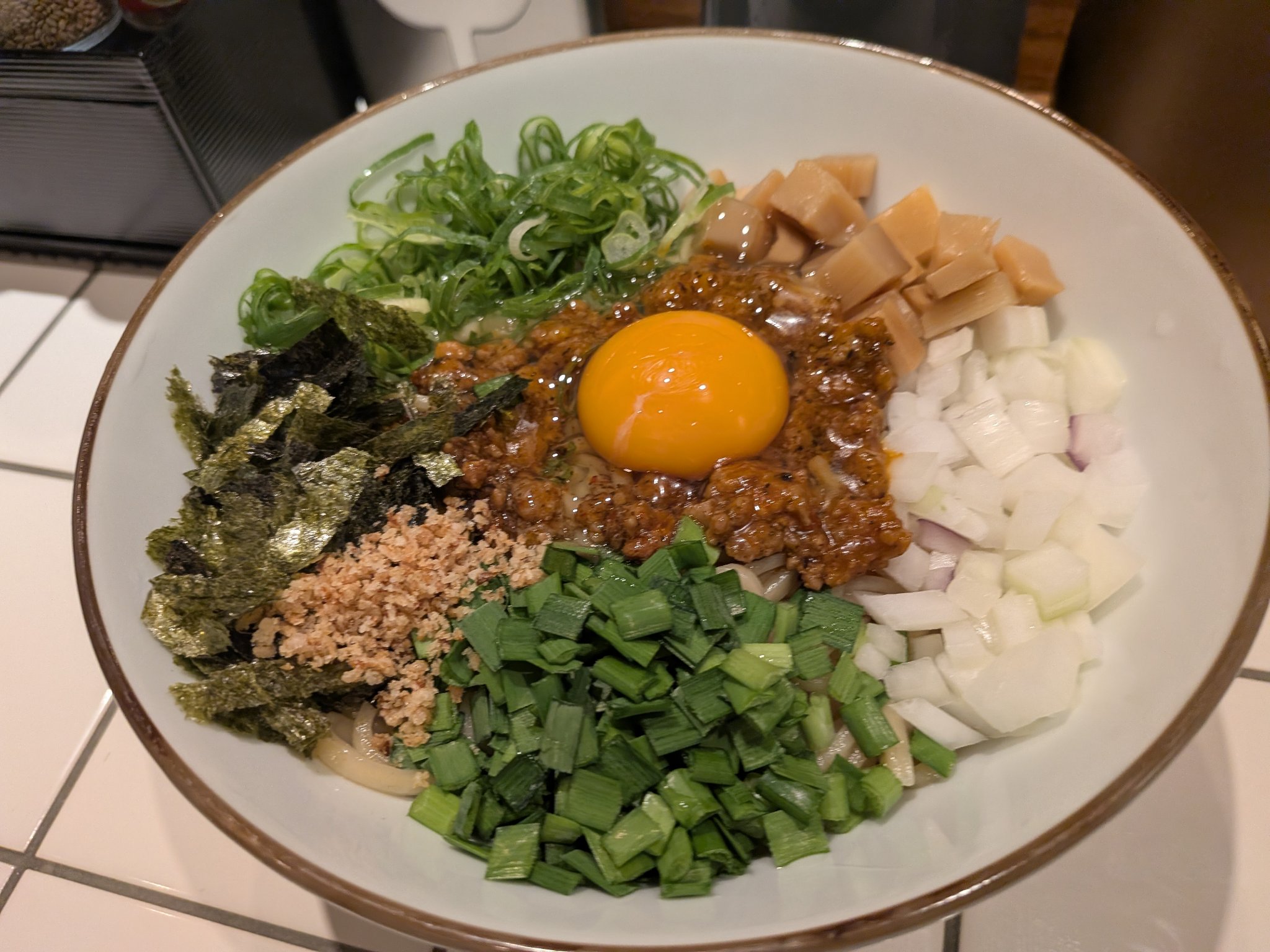
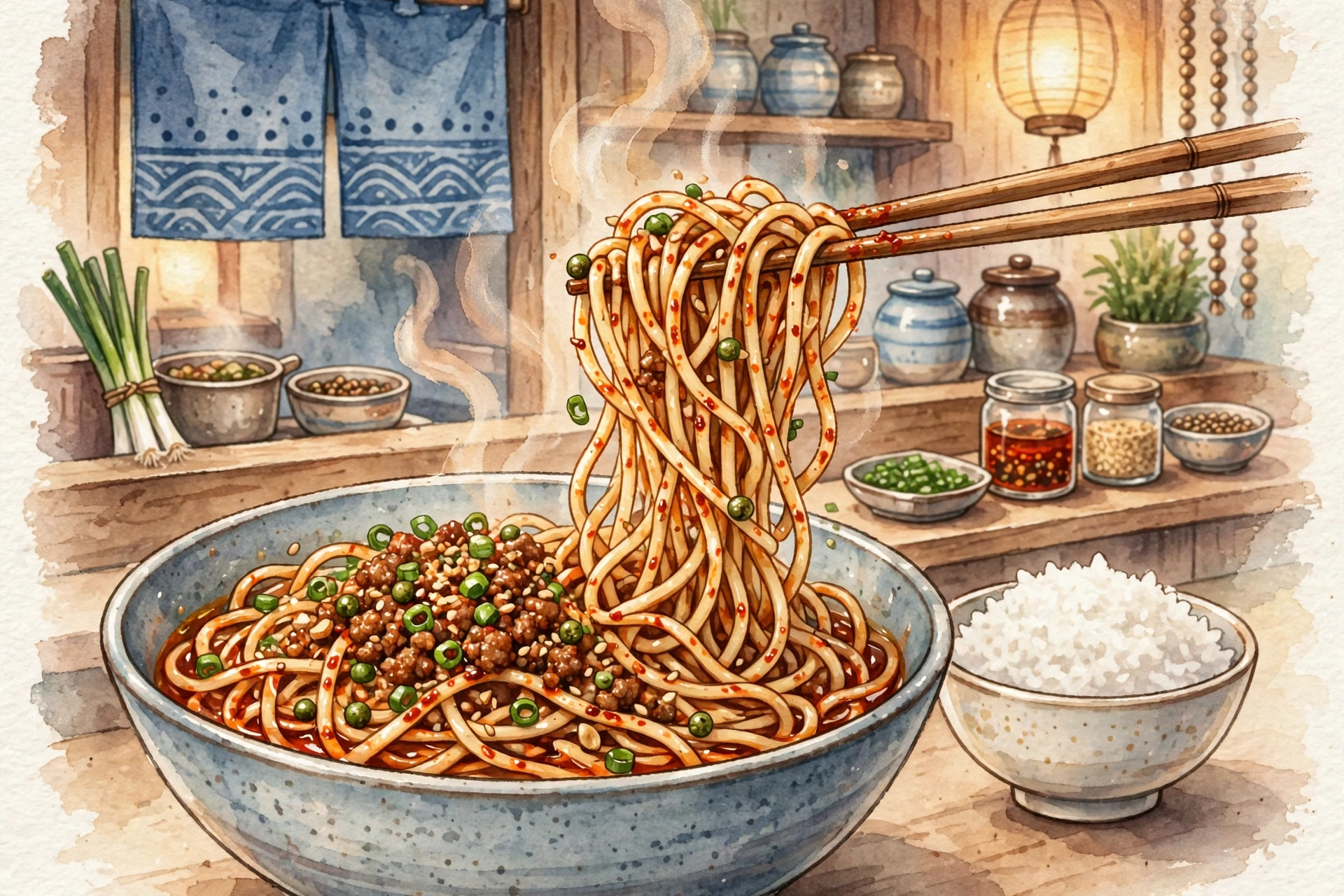
The bowl in the photo is Taiwan mazesoba (¥950): spicy minced pork, a raw egg yolk, garlic chives, spring onions, diced onion, bamboo shoots, nori seaweed and fish powder, all arranged around thick noodles. It looks too pretty to destroy. Destroy it anyway — that is the whole point.
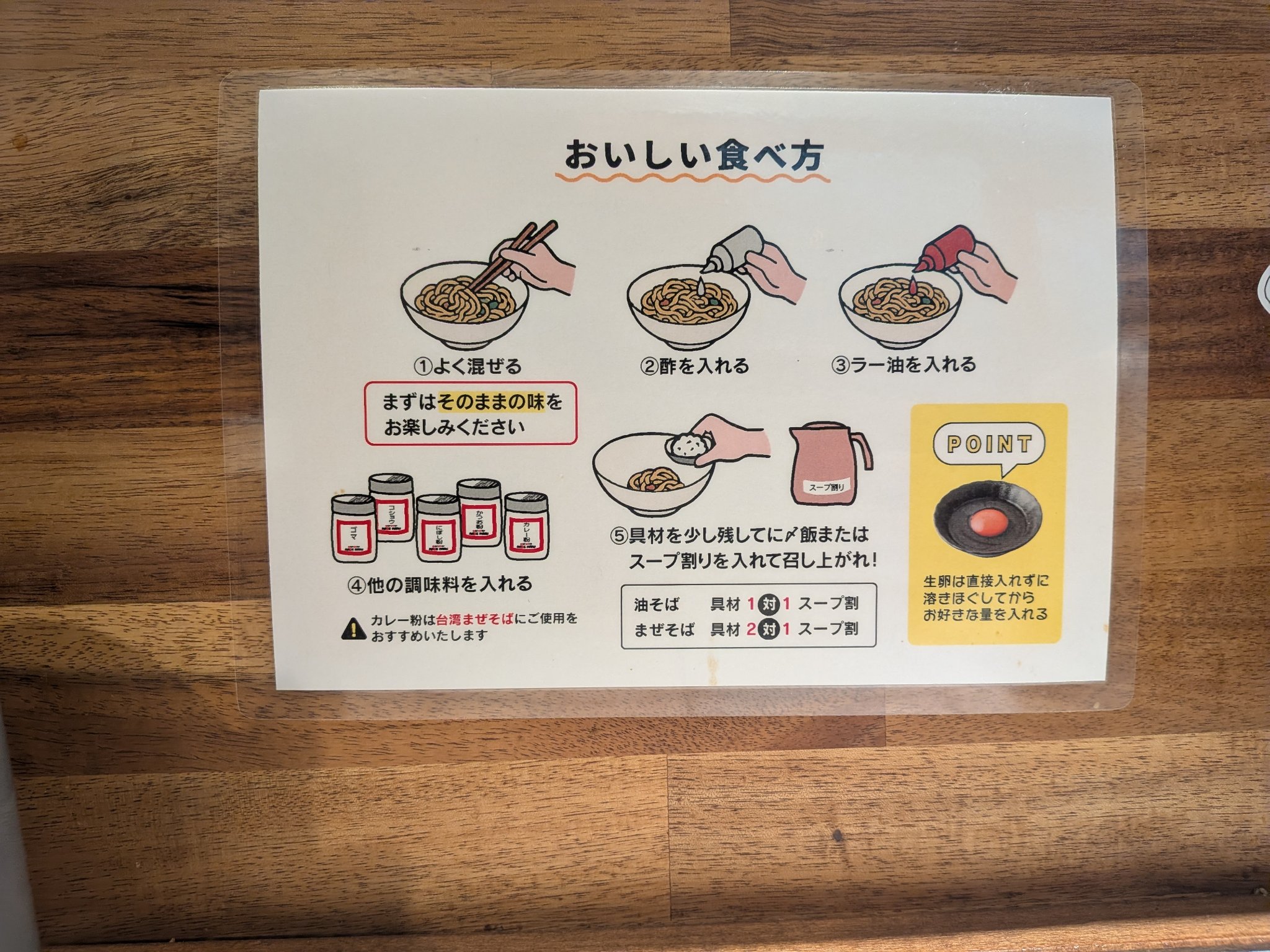
How to eat it (the shop’s own board, translated)
Mix well. First, enjoy the flavor as it is.
Add vinegar.
Add chili oil.
Add other seasonings — the counter offers niboshi (sardine) powder, bonito powder, curry powder (recommended for Taiwan mazesoba), pepper and sesame.
Finish right: leave a little of the toppings and add either a small bowl of rice (¥100) or hot soup to split the sauce — for mazesoba, two parts toppings to one part soup.
One pro detail from the board: if you add a raw egg, beat it in a separate dish first and pour in as much as you like — never drop it straight in.
My notes: the sharp bite of the garlic chives makes the bowl. Garlic is available, and it comes on a separate little dish so you control the amount — a thoughtful touch. When I visited, the noodle upsize was free (limited-time offer).
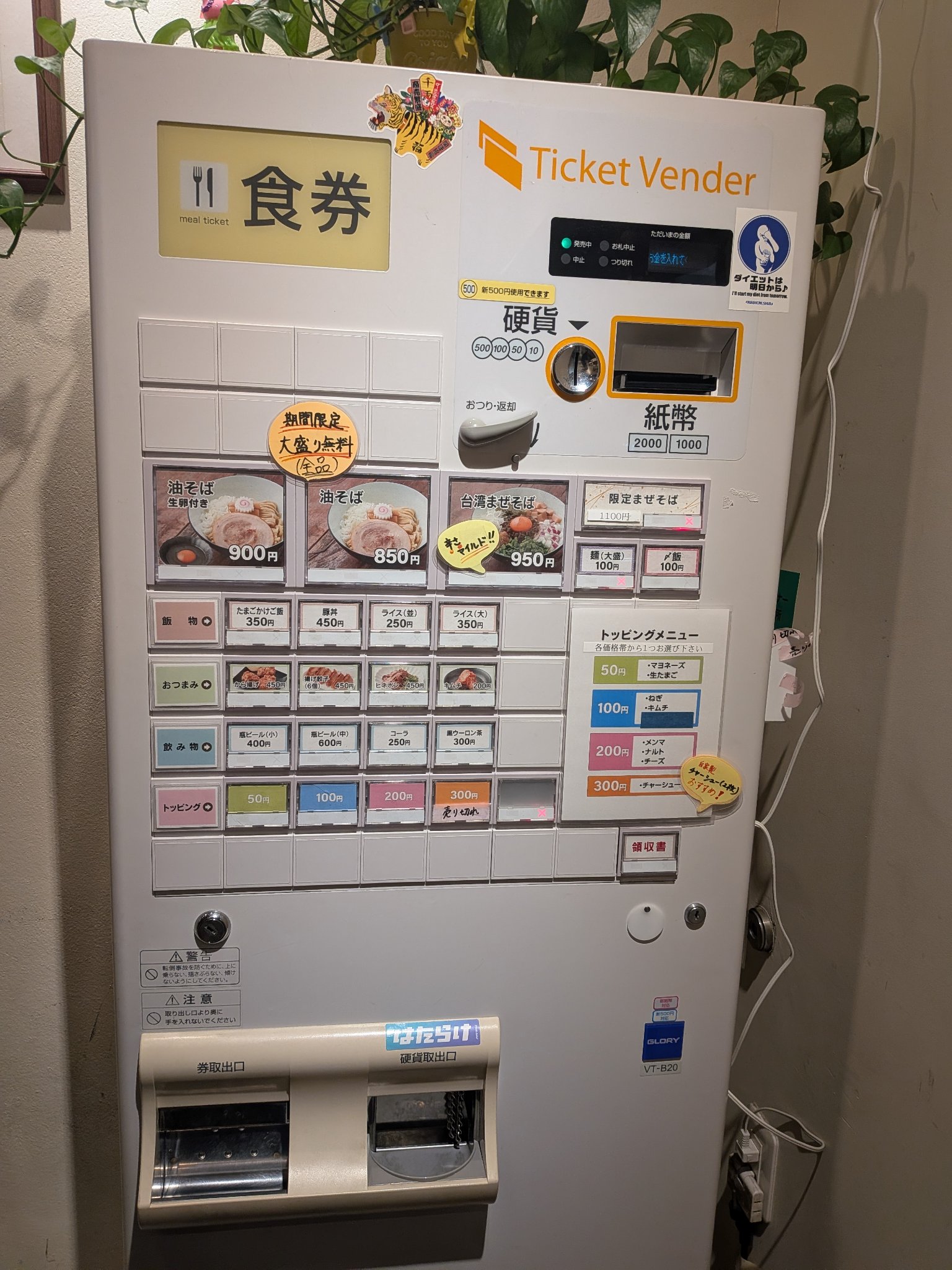
Menu (ticket machine)
Abura soba: ¥850 (with raw egg ¥900)
Taiwan mazesoba: ¥950
Limited mazesoba: ¥1,100
Toppings: ¥50–300 (mayonnaise, egg, spring onion, kimchi, cheese, chashu and more)
Himeji Castle gets the fame, but the castle town around it has its own quiet institutions. In the Nikaimachi shopping arcade, about ten minutes on foot from the station and the castle, Kineya has been making Japanese sweets since 1911 — more than 115 years of wagashi.
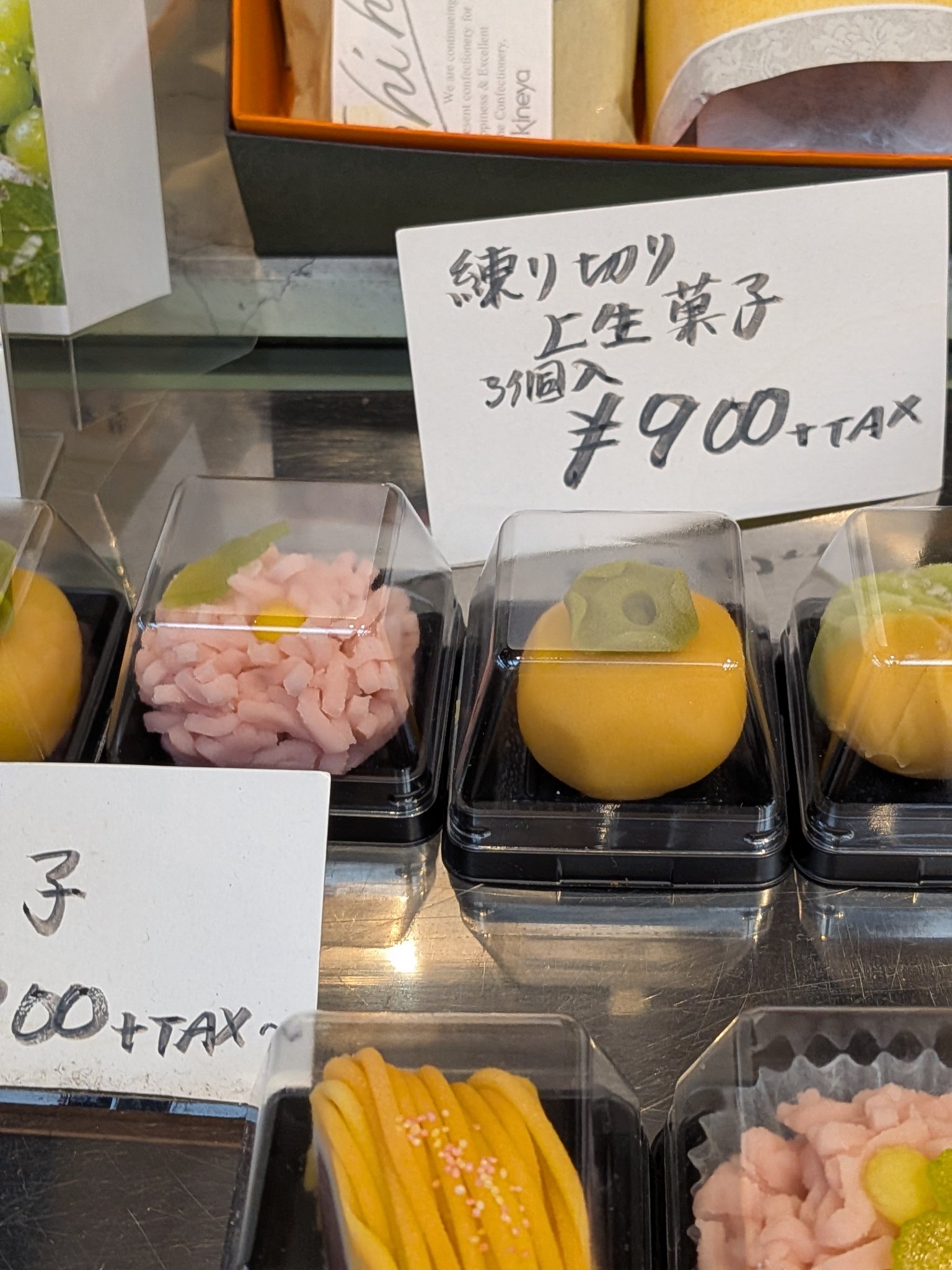
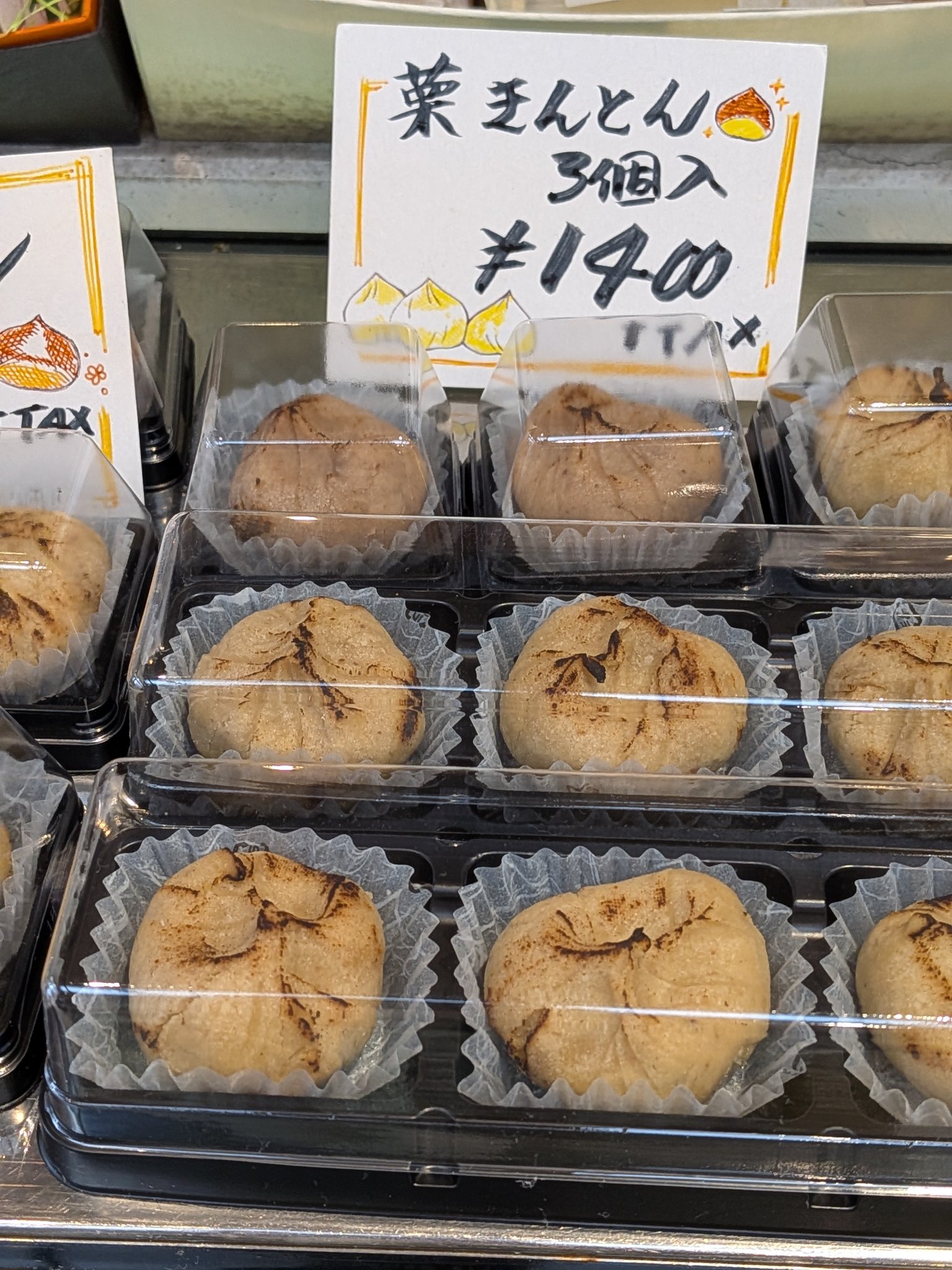
The display case tells the seasons. In autumn it is kuri kinton — sweet chestnut paste shaped back into a chestnut — and jewel-like nerikiri, each one modeled by hand into persimmons, flowers and leaves.
My take on the kuri kinton: it is properly sweet, yet the texture and flavor feel quietly luxurious — smooth on the tongue, with the chestnut itself coming through clearly.
The real prize: make wagashi yourself
What makes Kineya special for visitors is its wagashi-making workshop. Guided by a professional craftsman, you shape three seasonal nerikiri sweets of your own, in about 40 minutes.
Sessions daily at 13:00 and 15:00
¥2,800 per person, reservation required (2 people minimum)
Same-day booking is sometimes possible if you call in the morning
Support available in English, Korean, Chinese and Thai
For travelers, this is the Himeji experience most people miss: the castle in the morning, sweets by your own hand in the afternoon.
More than wagashi
Kineya is also a Western-style confectioner (its signature is the Shosha Sennen-sugi baumkuchen) and runs a café-restaurant upstairs, so it doubles as a lunch or coffee stop between the station and the castle.
Most people come to Himeji for the castle, see the great white keep, and head straight back to the station. They walk right past one of Japan’s best-value attractions: Himeji City Zoo, a small zoo that has sat inside the castle grounds since 1951.
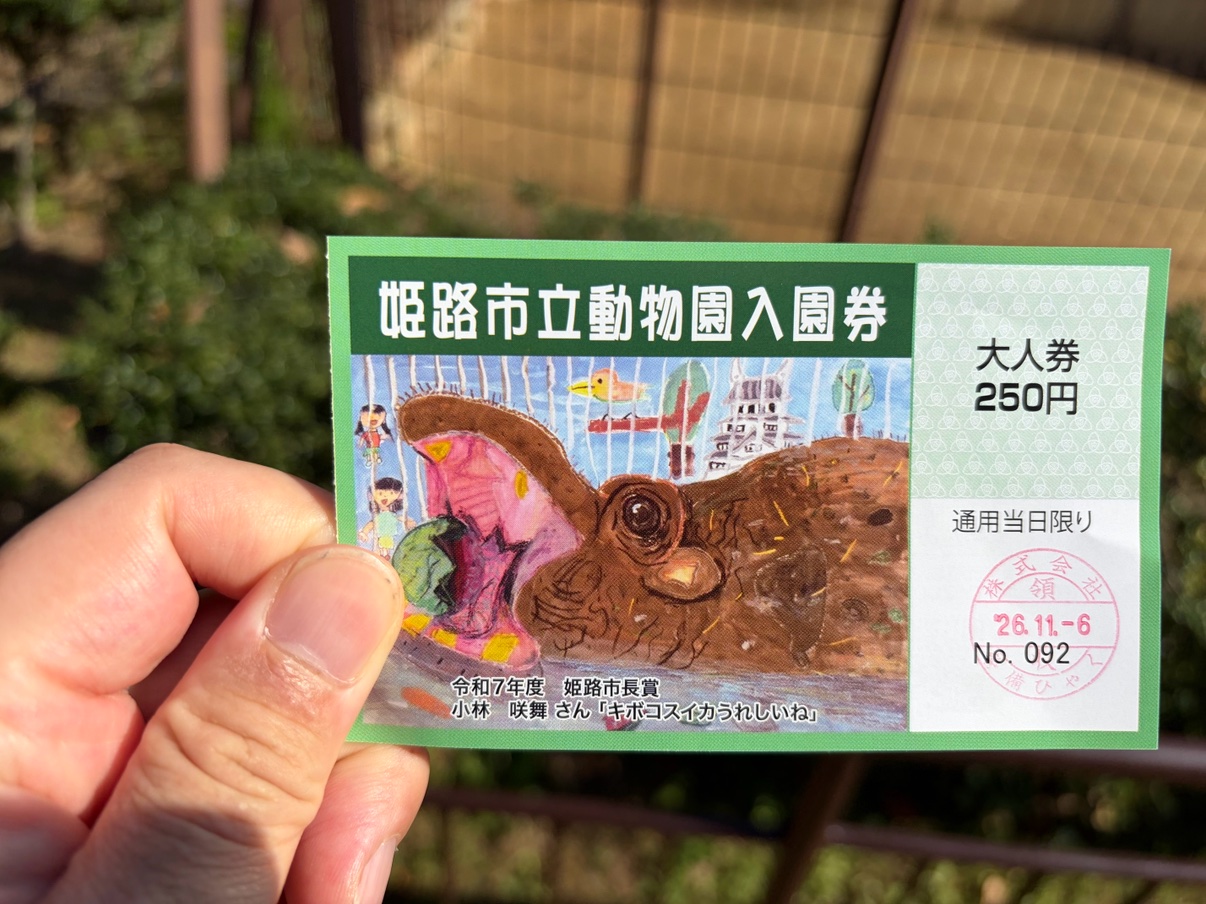
Admission is ¥250 for adults. Children (age 5 to junior high) are ¥50, and under-5s are free. That is not a typo, and it has been the local price for years.
Small grounds, proper animals
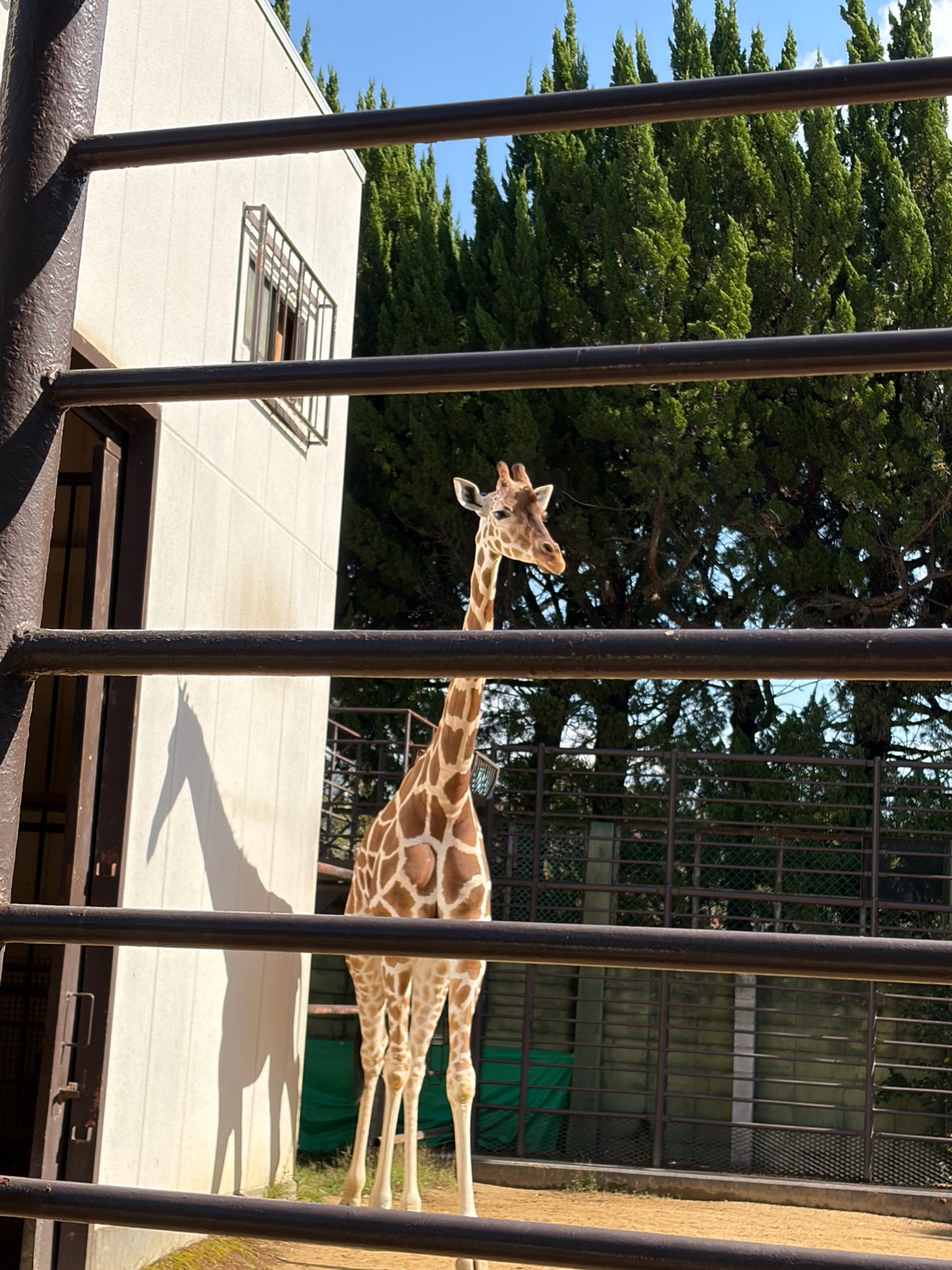
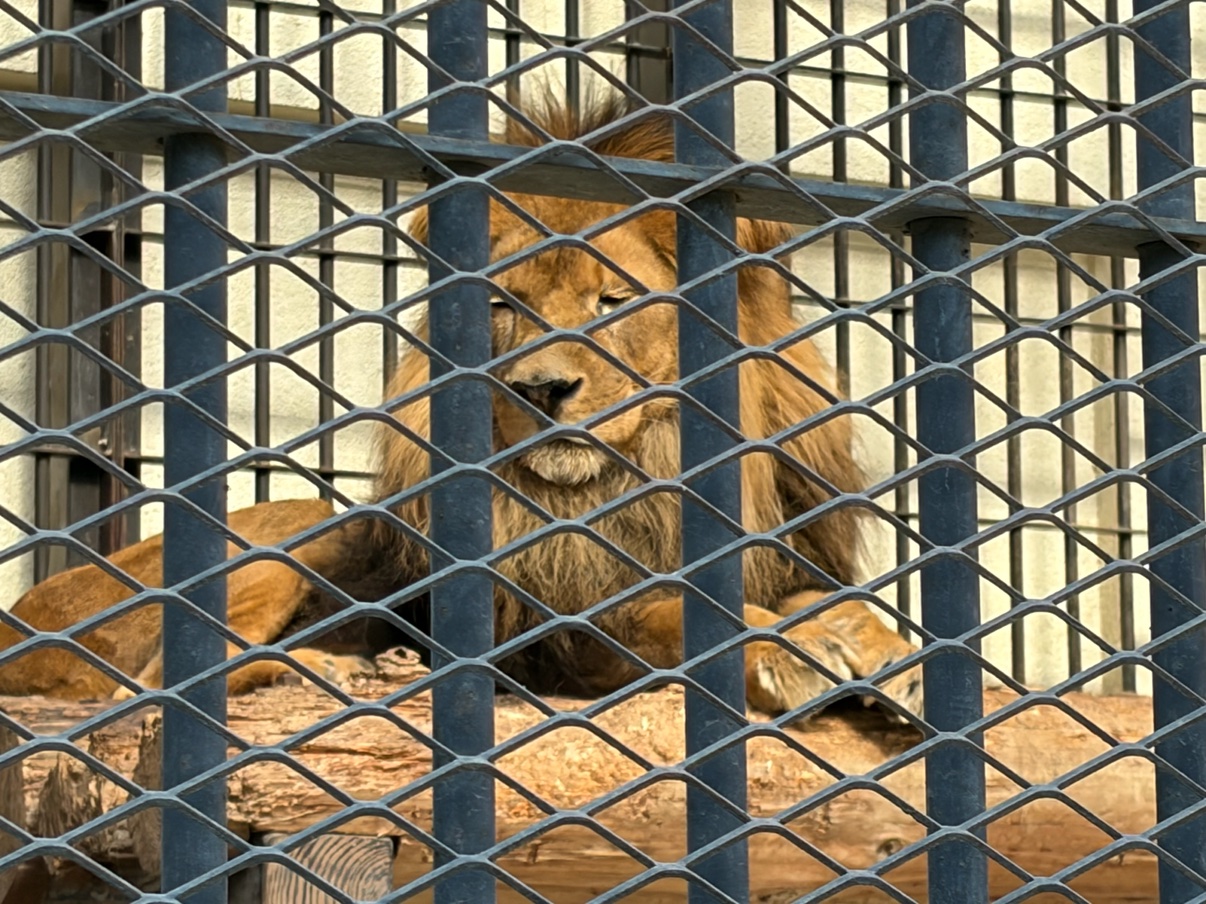
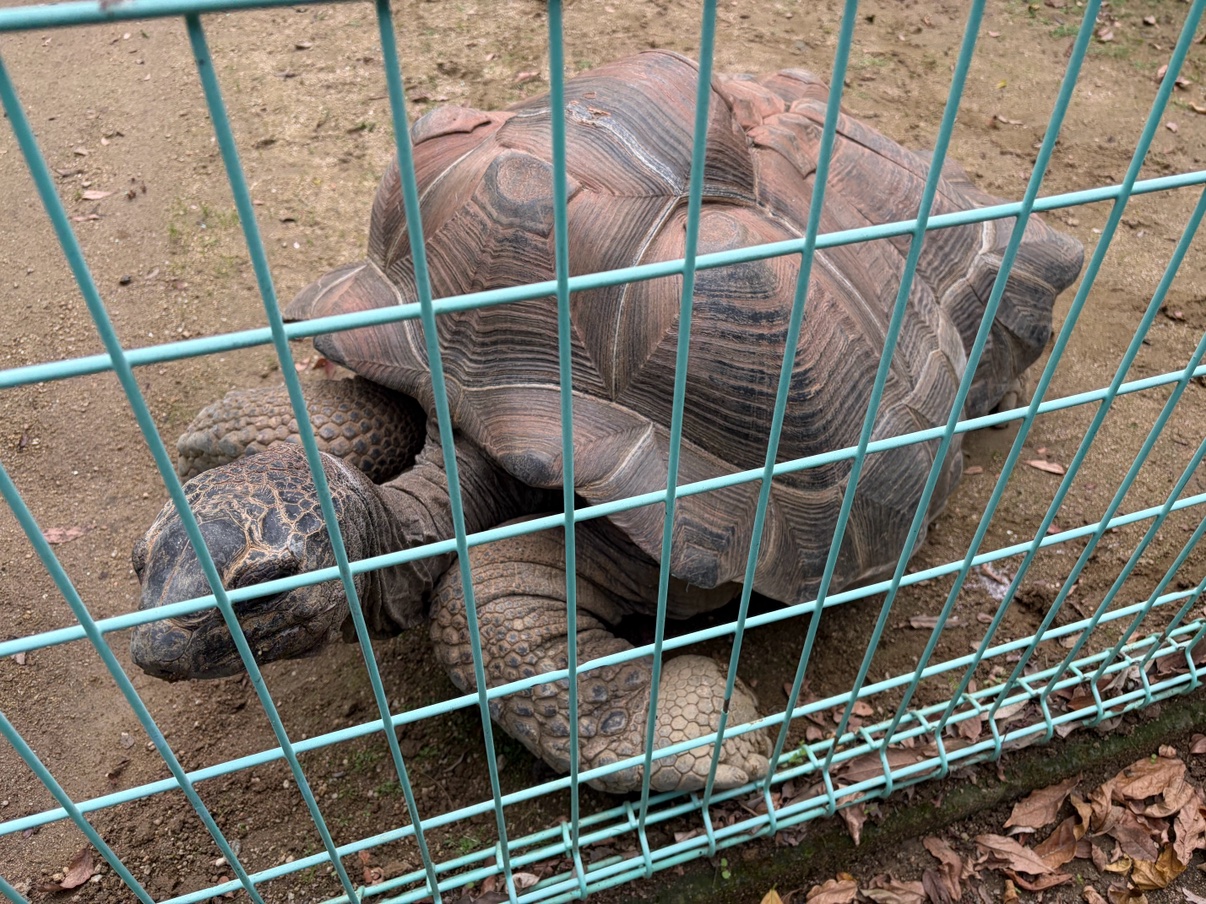
Do not let the size fool you. The zoo keeps a giraffe, a lion, sea lions and a giant tortoise, among others — animals you would expect at a zoo charging four times the price.
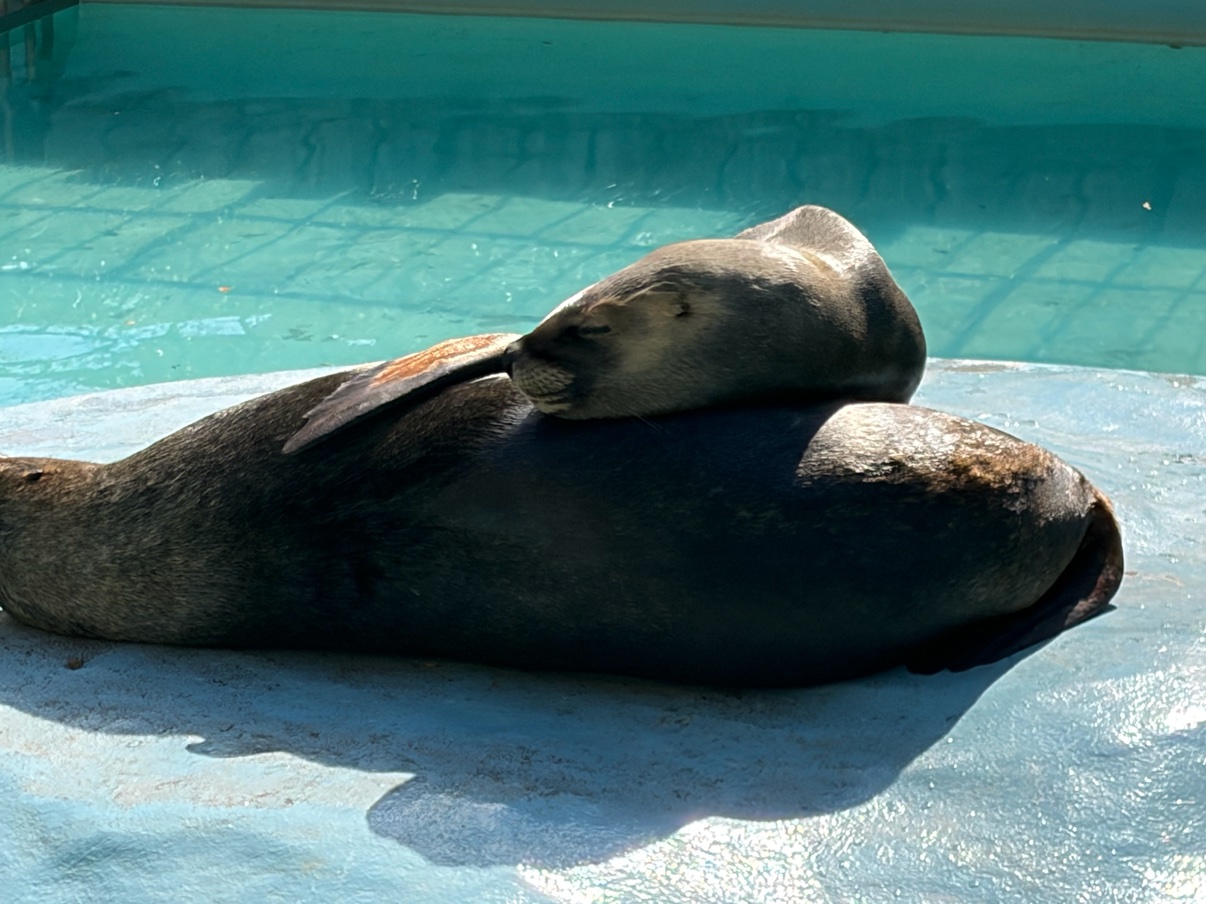
The sea lions were napping in a stack when I visited. The whole place has the relaxed pace of a neighborhood park, because that is exactly what it is for the people of Himeji.
How to fit it into your castle day
The zoo sits on the east side of the castle grounds, a few minutes’ walk from the main keep. Give it 30 to 60 minutes — after the castle, before lunch is the natural slot. It works especially well with kids, who may need a break from history, and as a slow finish to the day for everyone else.
One lovely detail: even the ticket is local. The admission ticket’s artwork is a child’s prize-winning drawing — a hippo, painted by a Himeji elementary school student.
Bonus tip: admission is free on a few days a year. In 2026, that includes Monday, November 16 (Kansai Culture Day) and December 11 (the anniversary of the castle’s World Heritage listing). If your trip lands on one of those, the best-value zoo in Japan costs nothing at all.
Zoo info
Name: Himeji City Zoo (姫路市立動物園)
Address: 68 Honmachi, Himeji (inside the Himeji Castle grounds, east side)
Hours: 9:00–17:00 (last entry 16:30)
Closed: December 29 – January 1 only
Admission: Adults ¥250 / Children (5–15) ¥50 / Under 5 free
Phone: 079-284-3636
By the author (Local Guide, based in Himeji & Hiroshima). Information as of November 2026; check the official site before you go.
If this guide helped you, you can support my work with a coffee.
Hiroshima has its own dan dan noodles — with no soup
Ask a Hiroshima local about soul food and soupless tantanmen (shirunashi tantanmen) will come up fast. Kingken’s Otemachi main shop is one of the names behind the style: a specialist counter a short walk from the Peace Park area, where the only real decision is how much numbing heat you want.
How it works
You buy a ticket from the machine, choose your spice level, and wait a few minutes. The bowl arrives with noodles hidden under minced meat, green onions and a glossy sauce of house chili oil and sansho pepper.
Then comes the ritual: mix it about 30 times, from the bottom, until every strand is coated. This is not a suggestion — the shop’s whole flavor design assumes it, and the taste changes completely once everything comes together.
Standard size (200g of noodles): ¥770
Large (300g): ¥920
Spice levels 0–4 at no extra charge
Which spice level?
Level 0: no chili oil, no sansho — fine for kids
Level 1: gentle warmth
Level 2: the standard, and the shop’s most popular. Start here.
Level 3–4: for people who actively love the numbing tingle
My personal pick is level 2. You get the full aroma of the sansho without it steamrolling everything else.
The finish: rice in the sauce
Order a half rice (¥80) with your noodles. When the noodles are gone, a pool of spicy, nutty sauce remains — dump the rice in and mix. Regulars treat this as the real final course, and after one try you will understand why. A soft egg topping (onsen tamago, ¥80) is the other classic add-on.
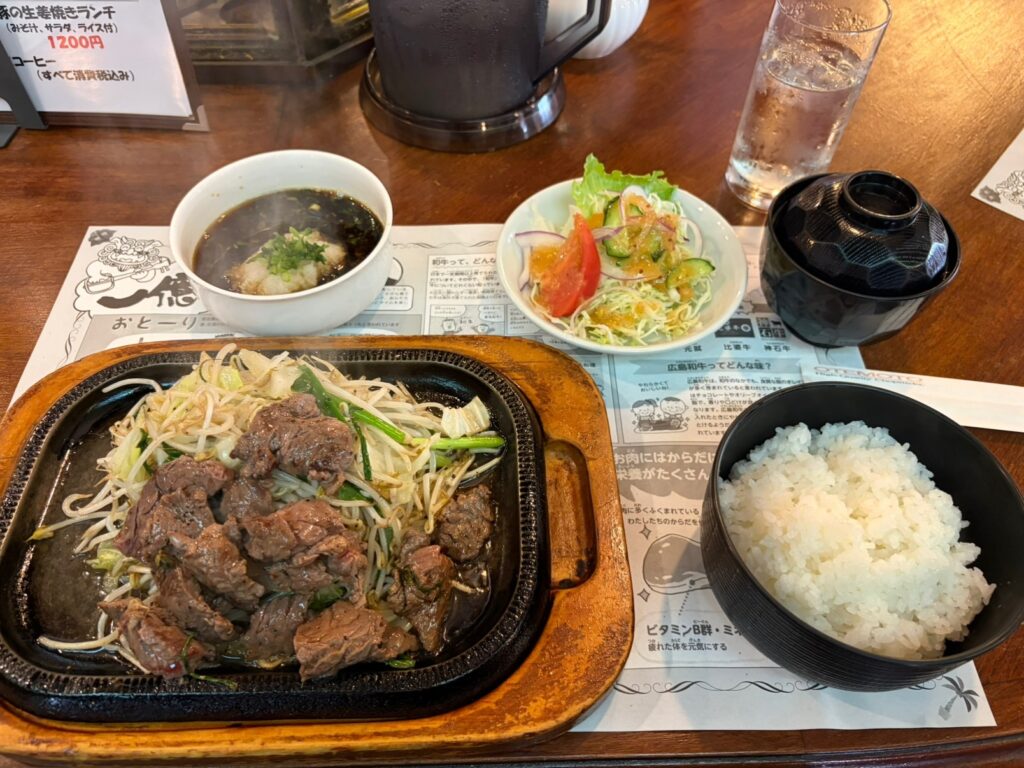
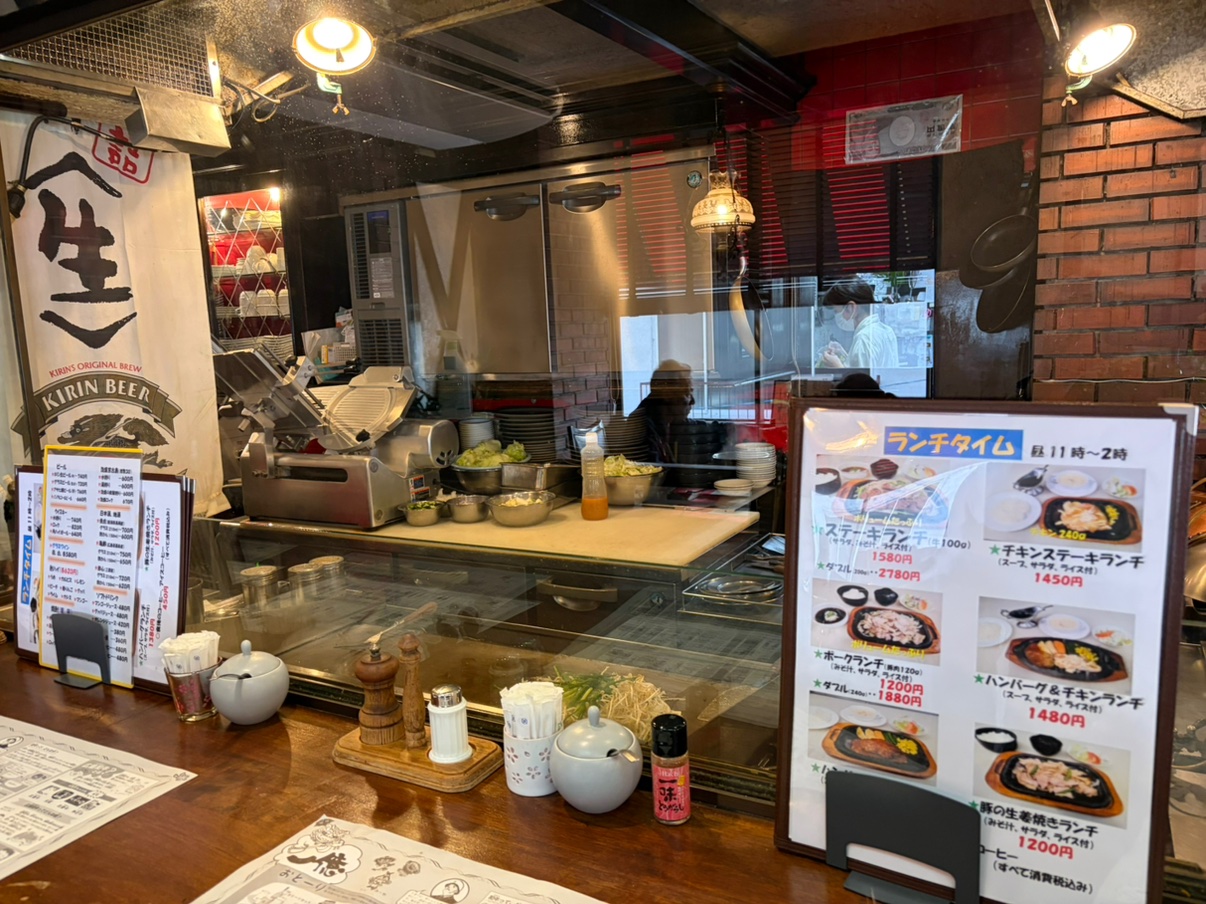
Mihara is a city many travelers pass through — it is a gateway to Onomichi and to Okunoshima, the famous Rabbit Island. But it is worth stopping for lunch. Ichioku Steak is a friendly, easy-to-enter local steakhouse where the lunch set is the star.
What you get
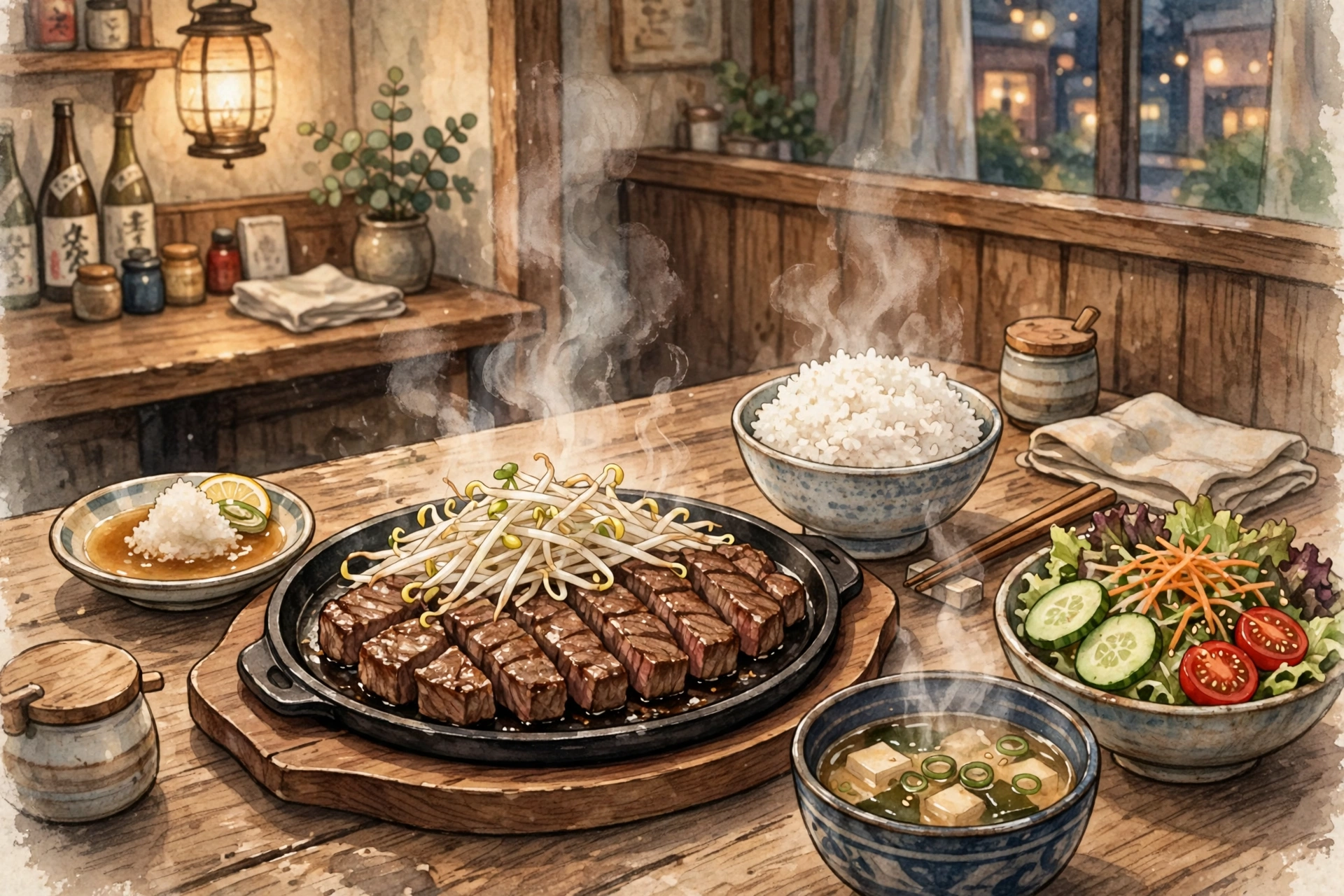
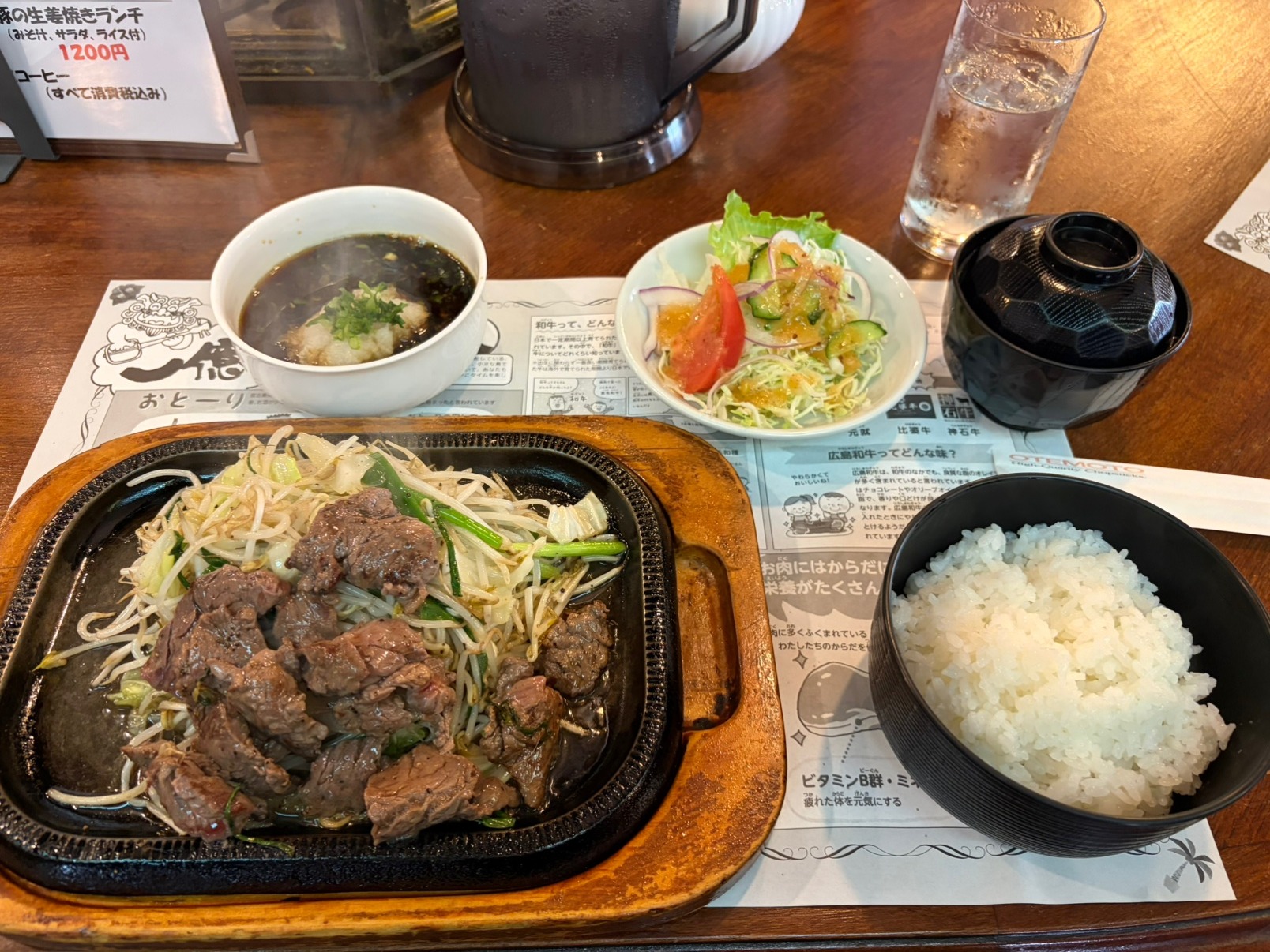
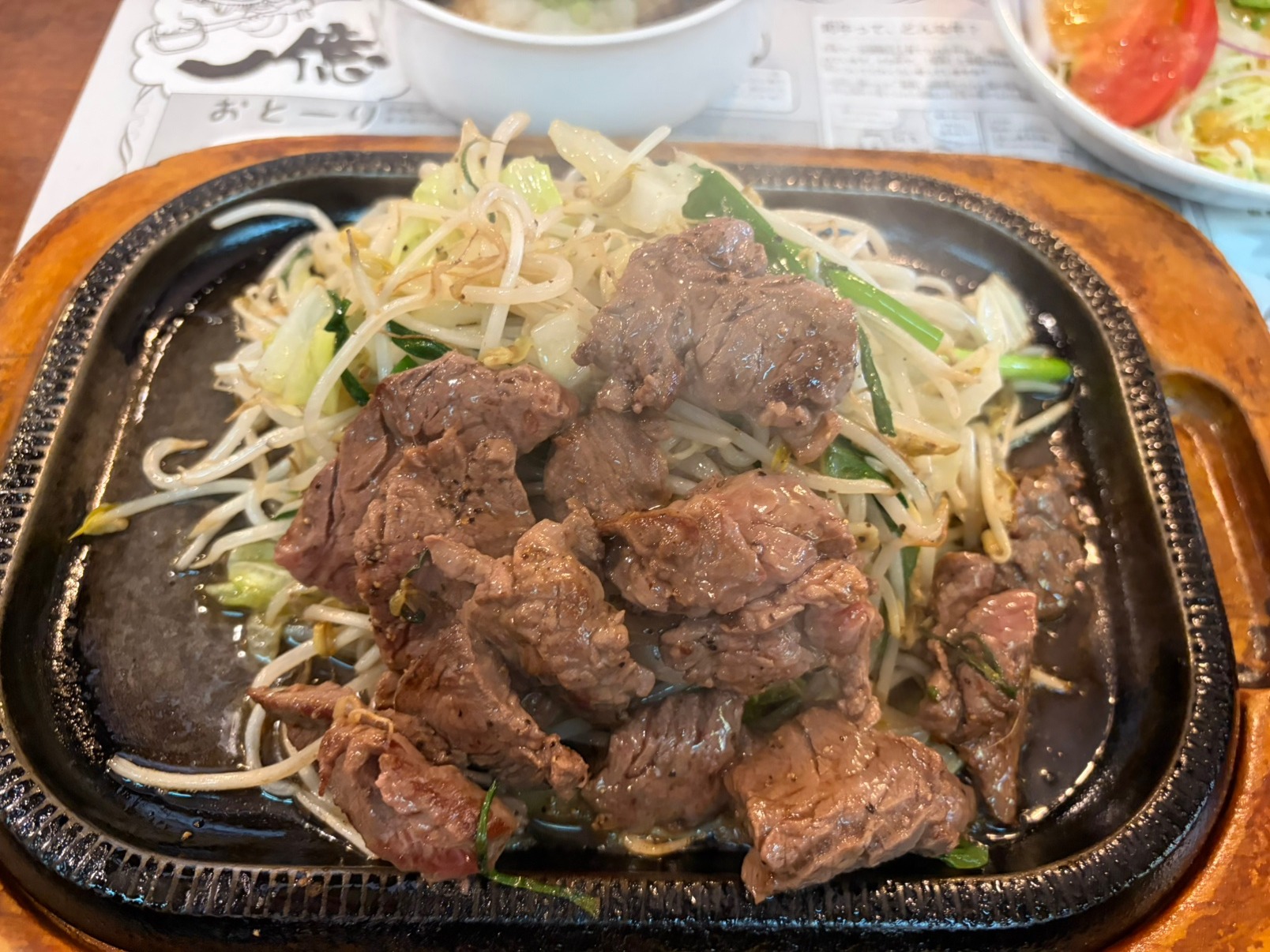
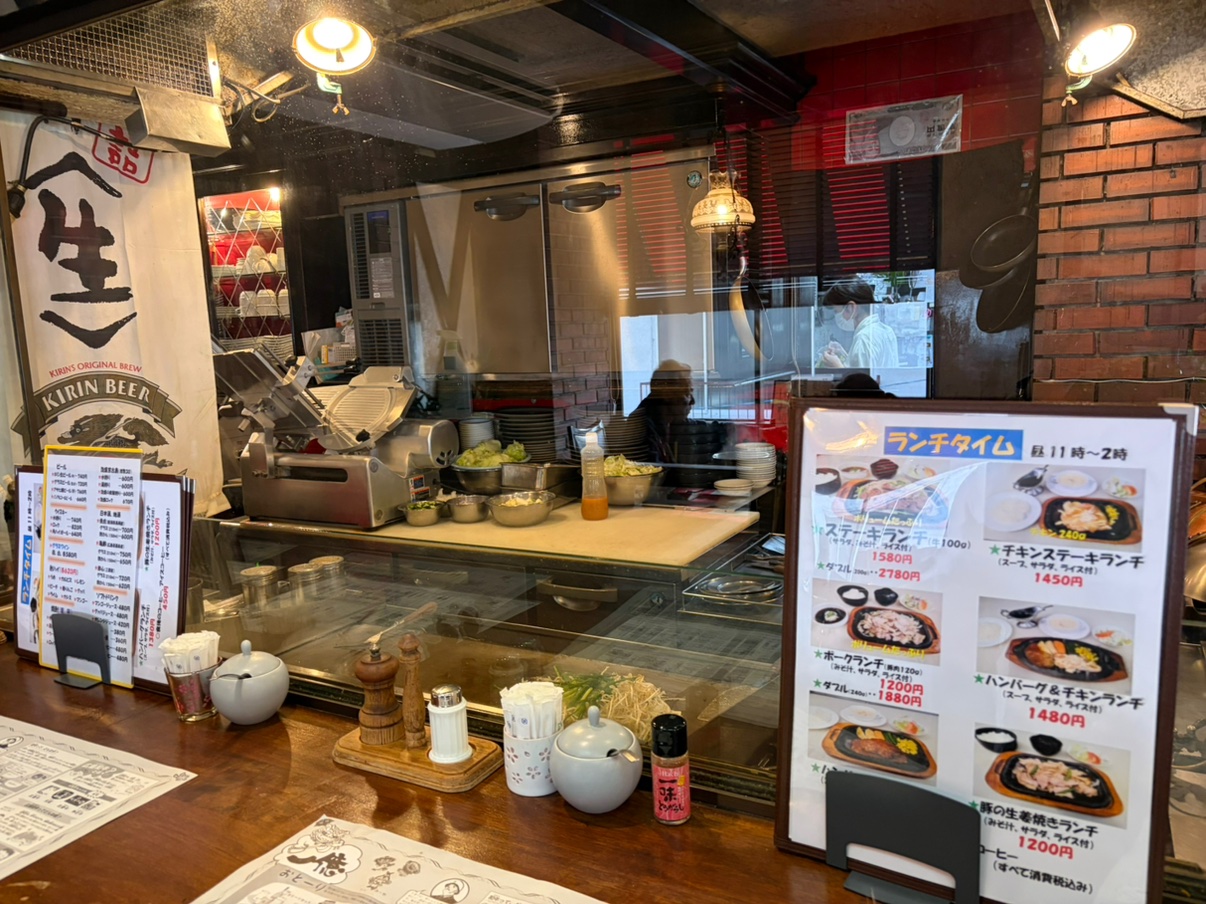
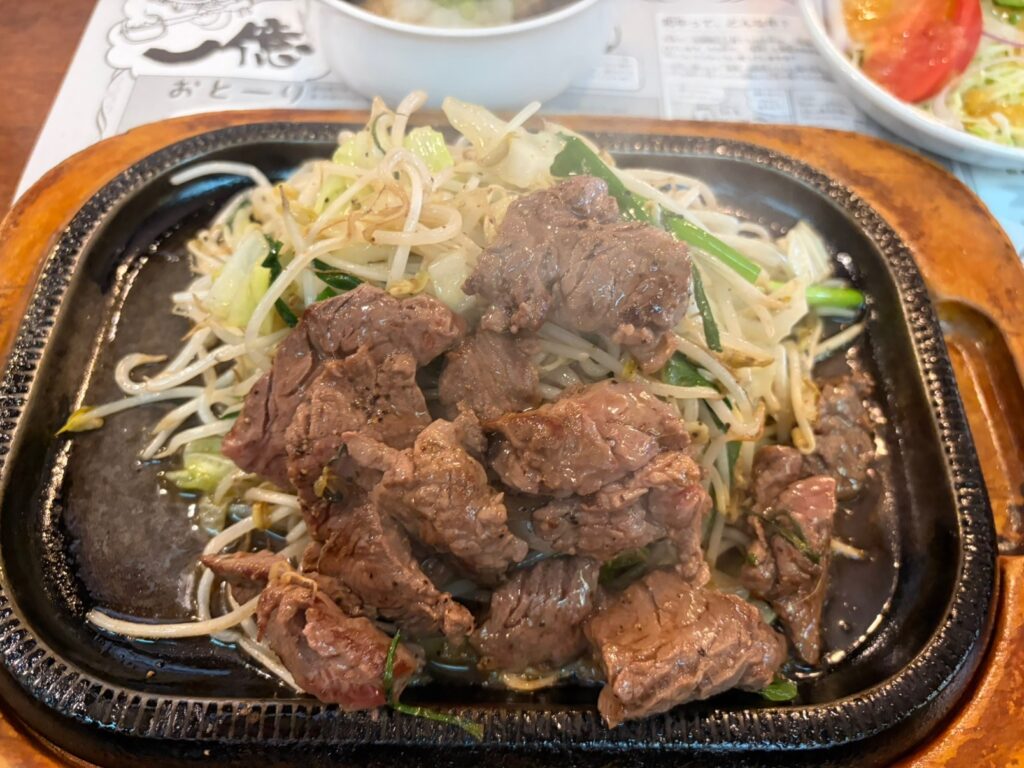
The signature Steak Lunch (¥1,580) comes with 100g of beef served on a sizzling iron plate, piled over bean sprouts and cabbage, plus salad, rice and miso soup. A double portion (200g) is ¥2,780.
The beef is sliced a little thinner than a classic Western steak — closer to yakiniku thickness — which makes it easy to eat with chopsticks. Dip it in the ponzu sauce with grated daikon radish: light, citrusy, and it never gets heavy, even with all that meat.
My personal notes:
The vegetables are generous — you will not leave feeling weighed down
The ponzu dipping sauce is the highlight; refreshing and addictive
The miso soup arrives properly hot (a small thing, but it matters)
The atmosphere is casual and welcoming, even for first-time visitors
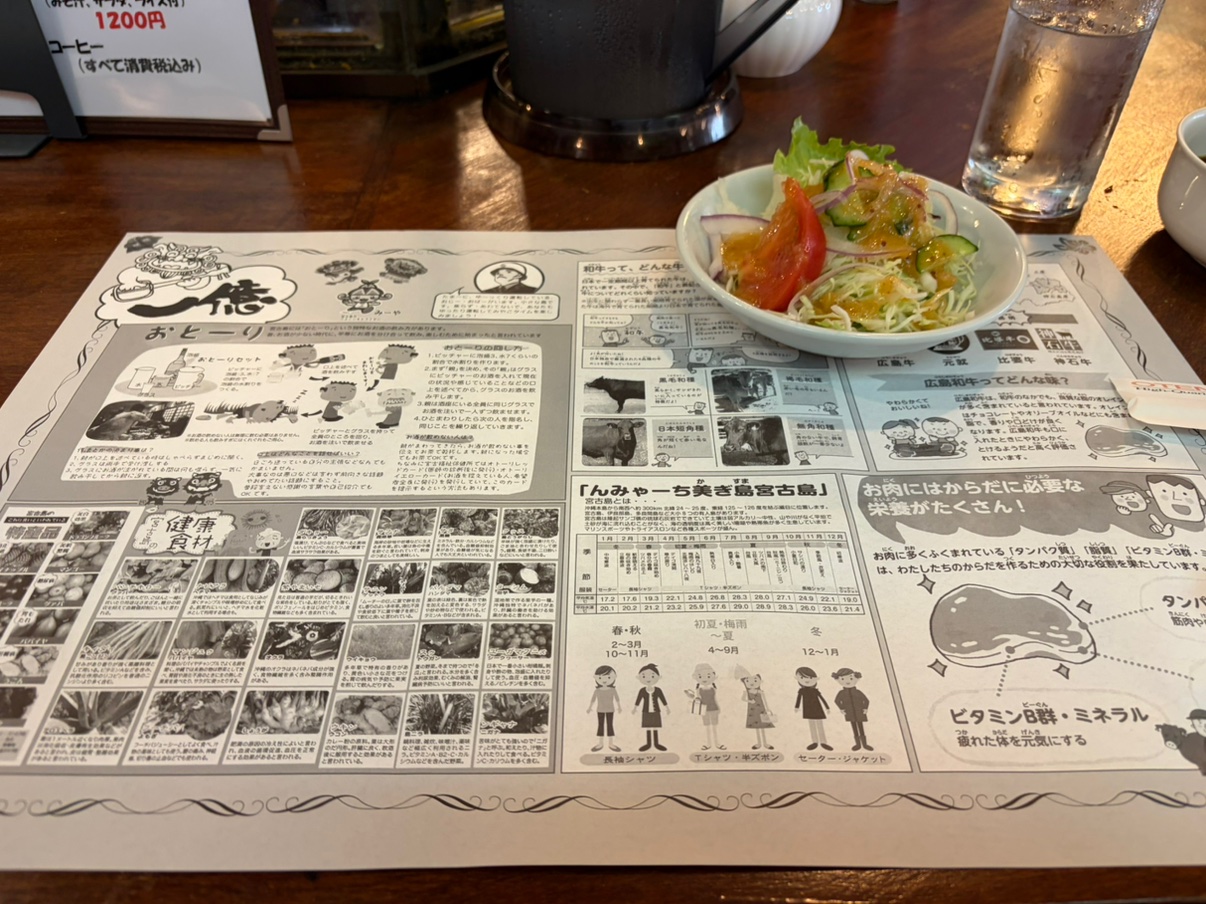
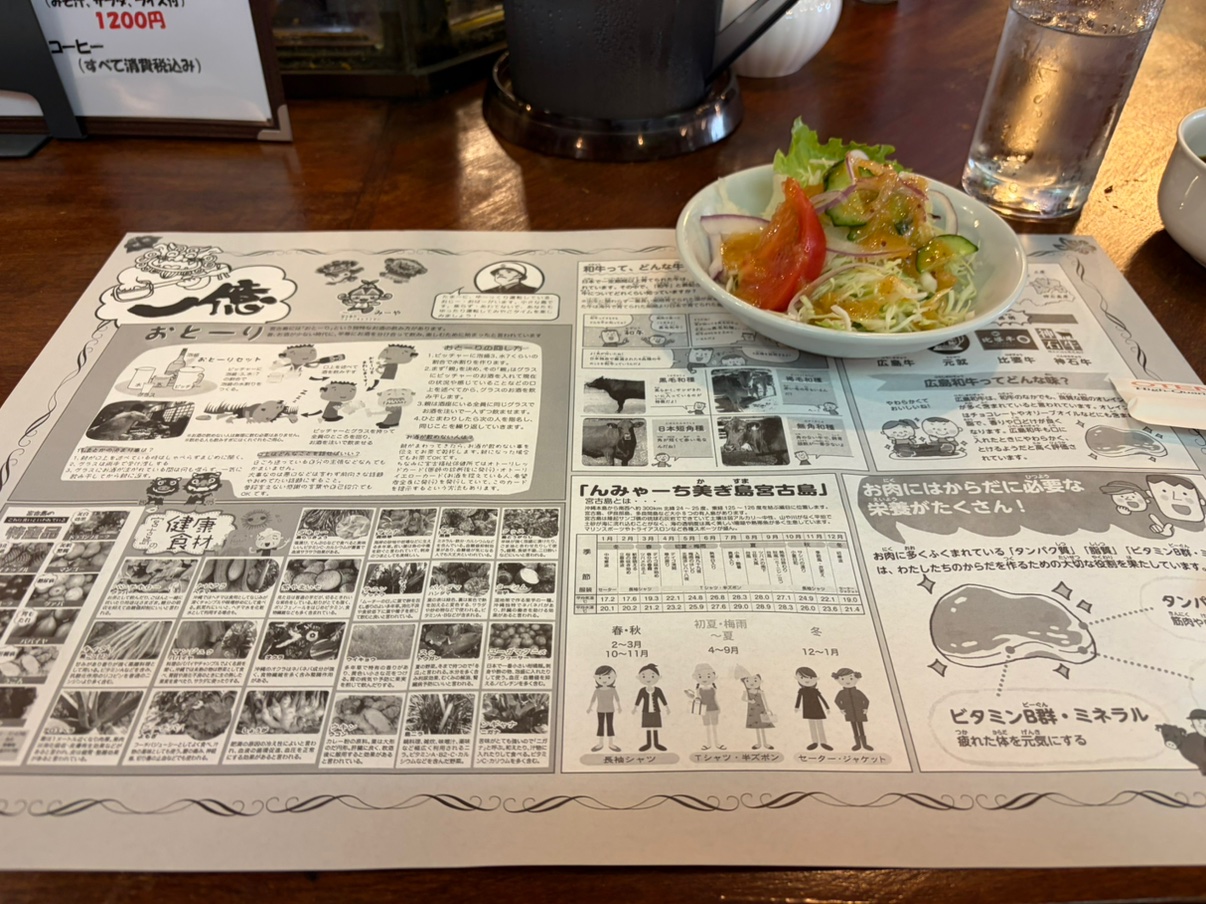
Hiroshima wagyu, explained on your placemat
One charming detail: the paper placemat is a manga-style guide to Hiroshima wagyu brands such as Hiba-gyu and Jinseki-gyu. You can learn about local beef while you wait for your plate to arrive.
Anyone passing through Mihara at lunchtime who wants a satisfying local meal at a fair price. Solo diners are fine at the counter, and the staff keep things moving, so it works even on a travel schedule.
Restaurant info
Name: Ichioku (ステーキ/しゃぶしゃぶ 一億)
Address: Yamada Building 2F, 1-12-24 Shiromachi, Mihara, Hiroshima
Access: About a 3–4 minute walk from JR Mihara Station
Hours: Lunch 11:00–14:00 / Dinner 17:00–22:00
Closed: Mondays (may change; check before you go)
Phone: 0848-62-2900
Photos and visit notes by the author (Local Guide, based in Himeji & Hiroshima). Prices as of November 2026.
☕ If this guide helped you, you can buy me a coffee. Your support keeps me exploring local food spots across western Japan.